Meta releases Muse Spark Open, an open-weight model that runs on Macs
Meta has released Muse Spark Open, an 816-billion-parameter open-weight AI model that, after optimisation work with Apple, can run locally on two M5 Ultra Mac Studios.
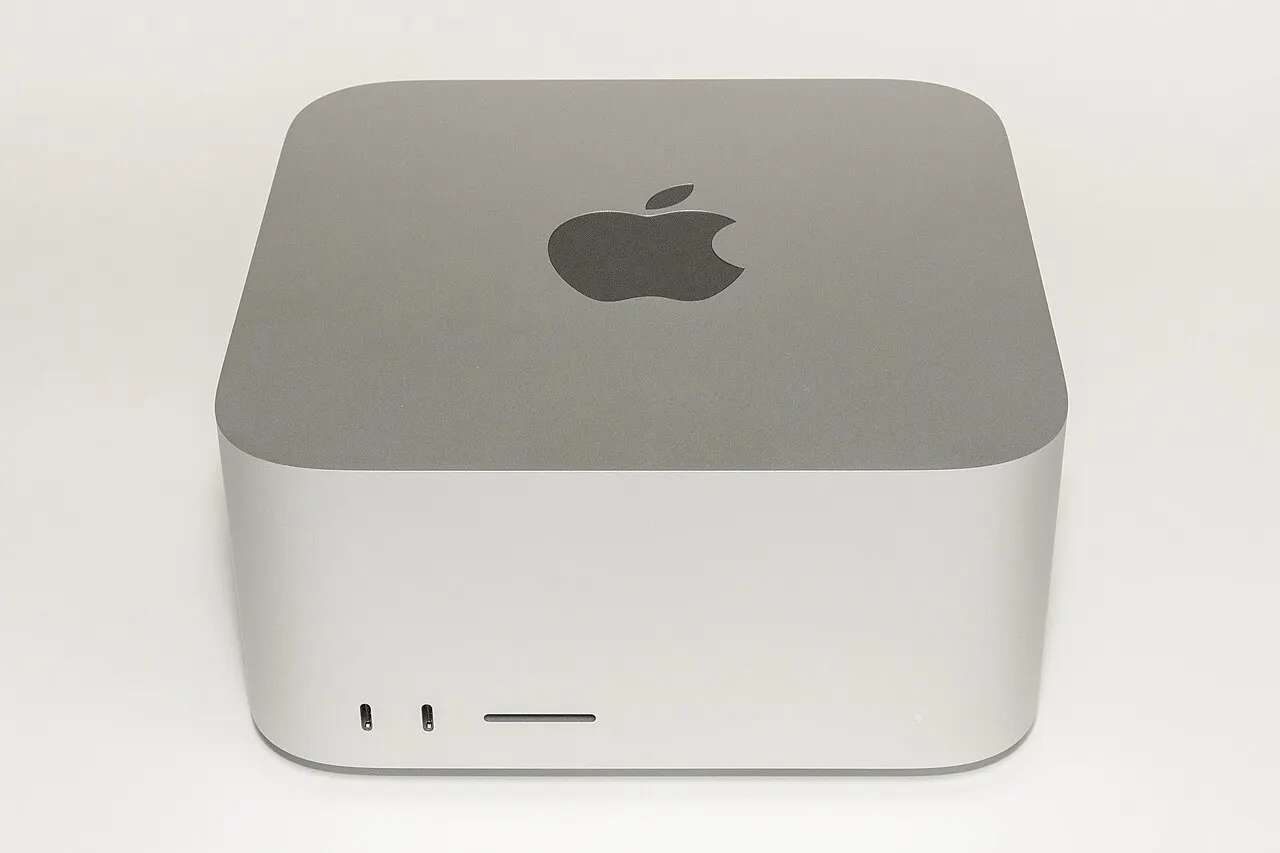
Meta on October 15, 2026 released Muse Spark Open, a new open-weight artificial intelligence model aimed at coding and multi-step reasoning. The company describes it as the most capable open-weight model built in the United States to date. Optimised together with Apple, the model can run locally across two Mac Studio desktops.
Muse Spark Open has 816 billion total parameters, of which 42 billion are active at a time, and a context window of one million tokens. It is natively multimodal. Meta says it was designed for complex software development, long-running tasks and workflows that require calling tools across several stages. In benchmarks published by the company, the model beats competing open-weight systems in some categories and comes close in others.
Two Mac Studios, one terabyte of memory
According to Meta, the model runs on a pair of M5 Ultra Mac Studios using Apple's MLX framework. Apple's unified memory design lets each machine's integrated GPU address up to 512 GB, so linking two units yields 1 TB across which the weights are split. Meta puts the M5 Ultra's memory bandwidth at 1.2 TB per second. The setup is far from cheap, though, and Apple has not yet published pricing for the 512 GB Mac Studio.
Apple hardware is not the only target. Supported inference software includes SGLang, vLLM, TensorRT-LLM, Hugging Face Transformers, Apple MLX, llama.cpp and Unsloth. The SGLang release ships with custom, auto-tunable Helion GPU kernels, which Meta says deliver kernel-level speedups of 1.03x to 3.95x on Nvidia and AMD cards and a 3% end-to-end gain on AMD's MI350. Developers can fine-tune the model with PyTorch and TorchTitan.
From bug fixes to video edits
Meta tested the model with Muse Code, its own AI coding terminal. In one demonstration it fixed bugs, added features and completed the build of Ice Cubes, an open-source Mastodon client. In another, working with DaVinci Resolve, it reviewed footage frame by frame, picked out highlights and cropped clips into vertical format.
API access is available through Baseten, Fireworks AI, Groq, Modal, Nebius, OpenRouter and Together AI, while the weights can be downloaded from Hugging Face, Amazon SageMaker AI, Google Cloud Model Garden and Microsoft Foundry Models. The release falls under the Muse Model License, which allows free use for many developers but places some restrictions on commercial deployment. The emphasis on local execution means users with sufficiently powerful hardware can run a frontier-scale model without relying on cloud services.
Comments
No comments yet. Start the discussion or ask a question.
Related
New US lab Reflection published its first model, Beam, on Hugging Face on October 16, 2026: a 501B-parameter open model built for coding and agents.

Kling AI's new Kling 4.0 model generates up to 30 seconds of video and accepts 15 multimodal references and 10 keyframes, pitching directorial control over raw visual quality.
Ant Group has published the weights of Ling-3.1-flash, a roughly 560-billion-parameter model that developers can now run on their own hardware.