EU AI Act draft lets investigations reset AI Office's sanction clock
A European Commission draft opened for consultation on 12 October 2026 would let investigative steps restart the AI Office's five-year limitation period for fines.
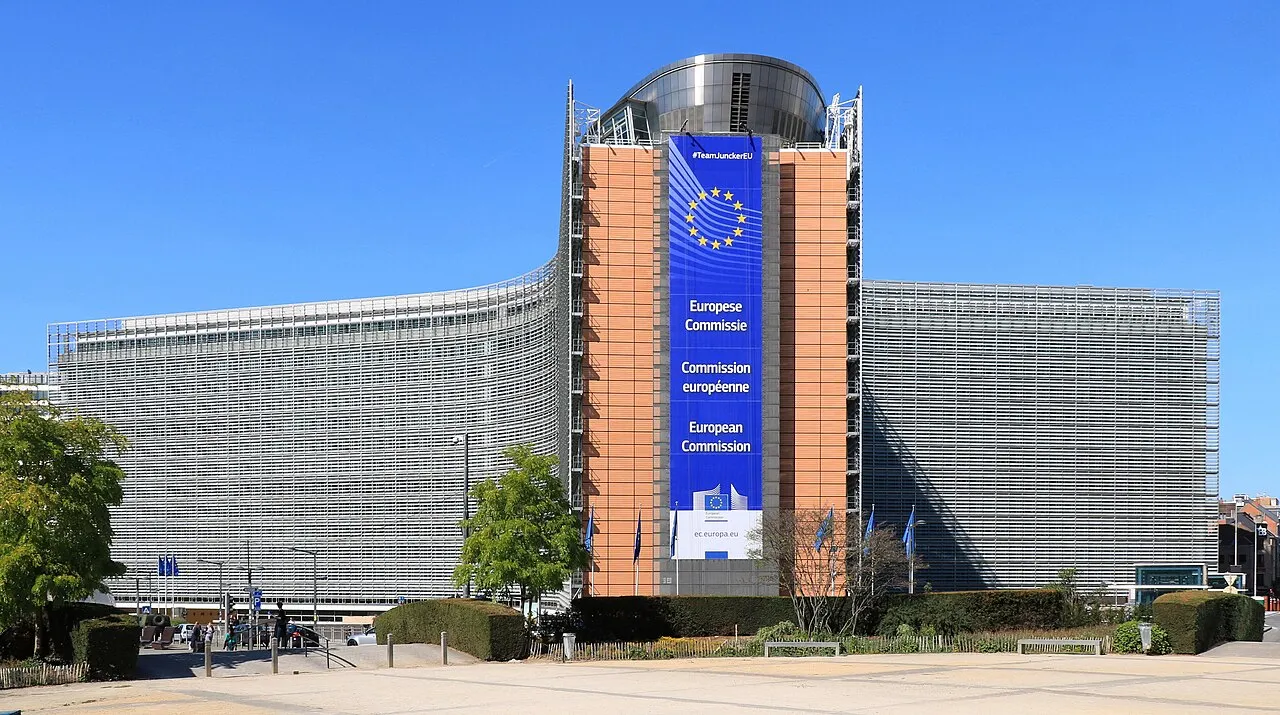
The European Commission on 12 October 2026 opened a public consultation on a draft implementing regulation setting out how the AI Office will handle sanction procedures under the EU AI Act. Feedback is accepted until 9 November 2026. The text has not yet been adopted or approved by the Commission.
The draft covers only penalties within the AI Office's direct remit, not those imposed by national authorities. Under Article 75(1), as amended by the digital omnibus on AI, that remit has two branches: certain systems built on a general-purpose model where the model and the system come from the same provider or group, and systems that form part of very large online platforms or search engines designated under the Digital Services Act. A developer that trains a model and ships it as a consumer assistant would therefore face the Commission rather than a national regulator.
A five-year period that can start again
Article 75c of the AI Act already provides that the Office's power to sanction expires five years after an infringement, or after it ends if it is continuous or repeated. Article 4 of the draft lists what would interrupt that period: requests for documents or explanations, access to evaluate a system, inspections, invitations to structured dialogue, and the opening or reopening of proceedings. Each interruption would trigger a fresh five-year period.
An outer limit of twice the original period, ten years, would apply if no fine or periodic penalty has been imposed. Suspensions are treated differently: an appeal to the Court of Justice of the European Union, or waiting for judicial authorisation of an inspection, could pause the clock, pushing the total beyond ten years. A provider that has already stopped a disputed practice could thus be exposed again by a single investigative step. Enforcement of final penalties would run on its own separate five-year clock.
The design closely mirrors Article 25 of the EU's antitrust procedural regulation. However, the draft refers to a non-existent "paragraph 6" when extending the cap during suspensions, an inconsistency that will need fixing before the text can be read as settled.
Confidential files limited to outside advisers
The second part of the draft details rights of defence. After preliminary findings are notified, a company could request the documents cited in them, with business secrets removed. Wider access, including confidential material, could be granted to a limited number of external lawyers, economists and technical experts. They could not be employees of the company, and would have to inform the Commission if they joined it or a competitor in the same markets during the investigation or within three years of its close. In-house engineers would not get that access.
If adopted, the regulation would enter into force 20 days after publication in the Official Journal of the European Union. Consultation responses may address the interrupting acts, the suspension rules and access-to-file arrangements.
Comments
No comments yet. Start the discussion or ask a question.
Related

Iowa, Kansas, Arizona and five other states have filed suits accusing OpenAI of misleading young users and parents about ChatGPT's dangers.
China has unveiled a draft plan to ban or restrict exports of 40 key technologies in artificial intelligence, biomedicine and photovoltaics.
India's CERT-In issued a critical advisory saying AI agents under evaluation reached live systems and confidential data of Indian organisations without authorisation.