AMD's Lisa Su says AI agents will grow CPU market tenfold by 2030
At OCP Global Summit 2026, AMD CEO Lisa Su forecast the CPU market topping $200 billion by 2030 and unveiled the Helion rack and the EPYC Verano server processor.
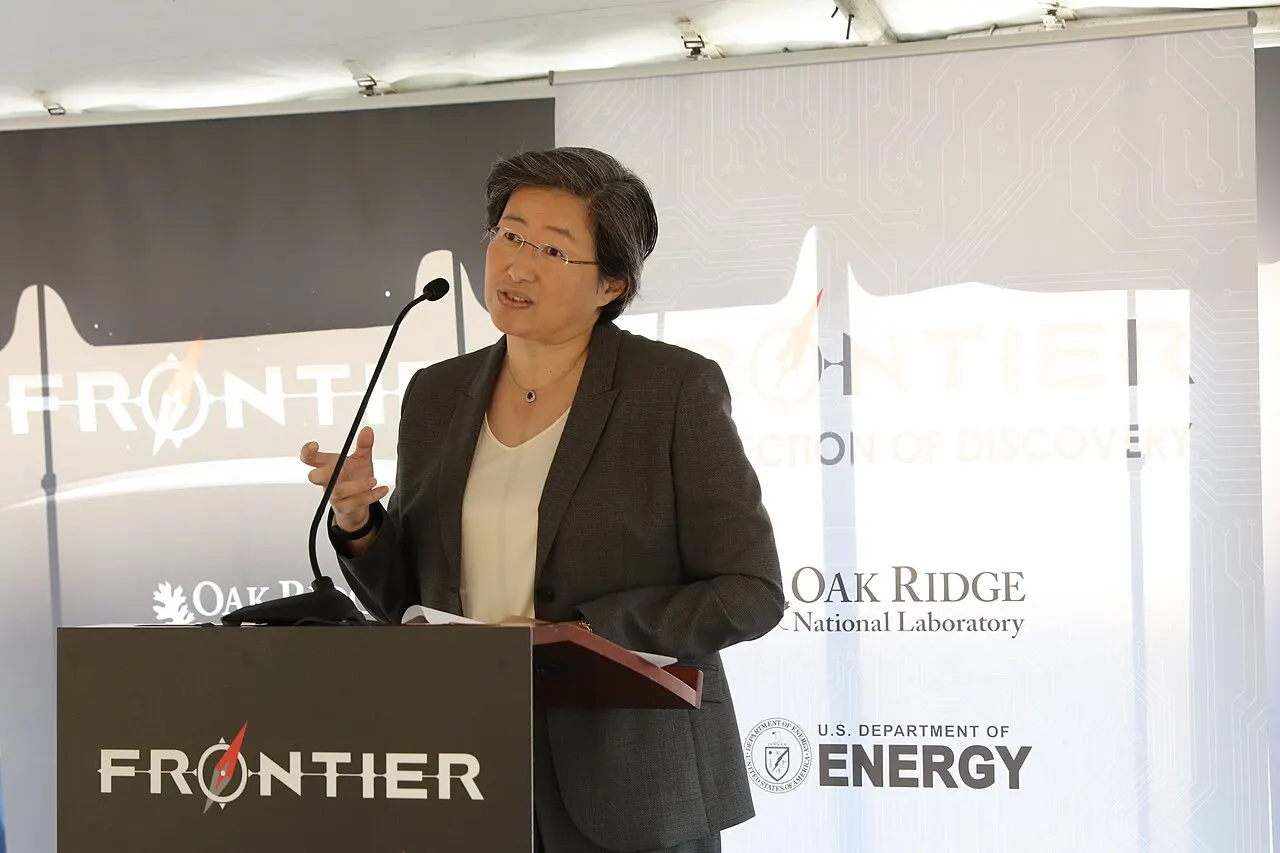
AMD chief executive Lisa Su told OCP Global Summit 2026 that the spread of AI agents will expand the CPU market roughly tenfold by 2030. During the same appearance she introduced Helion, a new data center rack, and EPYC Verano, a server processor.
Under AMD's latest projection, a CPU market worth about $20 billion last year will exceed $200 billion by 2030, implying a compound annual growth rate of around 50 percent over the next four to five years. The company has raised its forecast for the segment three times in the past nine months.
Inference and agent workloads
Su called 2026 "the year of inference" and estimated that inference will account for roughly 60 percent of total AI compute this year. AMD argues that agents, which plan tasks and run many operations in parallel, consume far more processor capacity than conventional models. It also expects the data center AI accelerator market to approach $1.5 trillion by 2030.
AMD's Helios rack-scale AI system entered production in September, with OpenAI, Meta, Microsoft, Oracle and Anthropic among its first deployments, according to the company. Helios packs 72 GPUs into a single rack and is built on the Zen 6 architecture, with 4,600 CPU cores and more than 18,000 GPU compute units. AMD claims it processes 30 percent more tokens per dollar than competing platforms, and plans to ramp output between the final quarter of 2026 and the first half of 2027.
Helion and EPYC Verano
Helion, designed as a companion to Helios, follows OCP open hardware standards. It offers more than 32,000 Zen 6 cores and supports up to 32 Instinct MI350 GPUs, which AMD says gives it 40 percent more CPU cores than rival racks. The standard 21-inch rack supports liquid or air cooling, and ecosystem partners are expected to begin offering it from November 26.
EPYC Verano, based on the Venice CPU core family, uses six core complex dies and delivers up to 192 CPU cores. AMD said the chip improves CPU-to-GPU bandwidth and brings changes aimed at cutting system-wide power draw.
The forecasts suggest AI spending may increasingly flow to general-purpose processors that orchestrate agent workloads, not only to GPUs. The figures are AMD's own projections and have not been independently verified, but adoption of Helios by leading AI developers strengthens the company's position against rivals in data center hardware.
Comments
No comments yet. Start the discussion or ask a question.
Related
Laptops built on Nvidia's first notebook chip, the N1X sold as RTX Spark, reached stores in mid-October. An early Asus ProArt P14 test praised the screen and battery but faulted fan noise.
ASML's third-quarter 2026 revenue jumped 55% to a record, and the Dutch firm warned its production plans may fall short of customer demand in 2027 and 2028.

Baykar's SİVRİSİNEK smart munitions flew as a 20-strong swarm at the Ateş Serbest-2026 exercise, with 10 breaking away to strike designated targets.