ASML posts record $13.06 billion quarter as AI chip demand outruns capacity
ASML's third-quarter 2026 revenue jumped 55% to a record, and the Dutch firm warned its production plans may fall short of customer demand in 2027 and 2028.
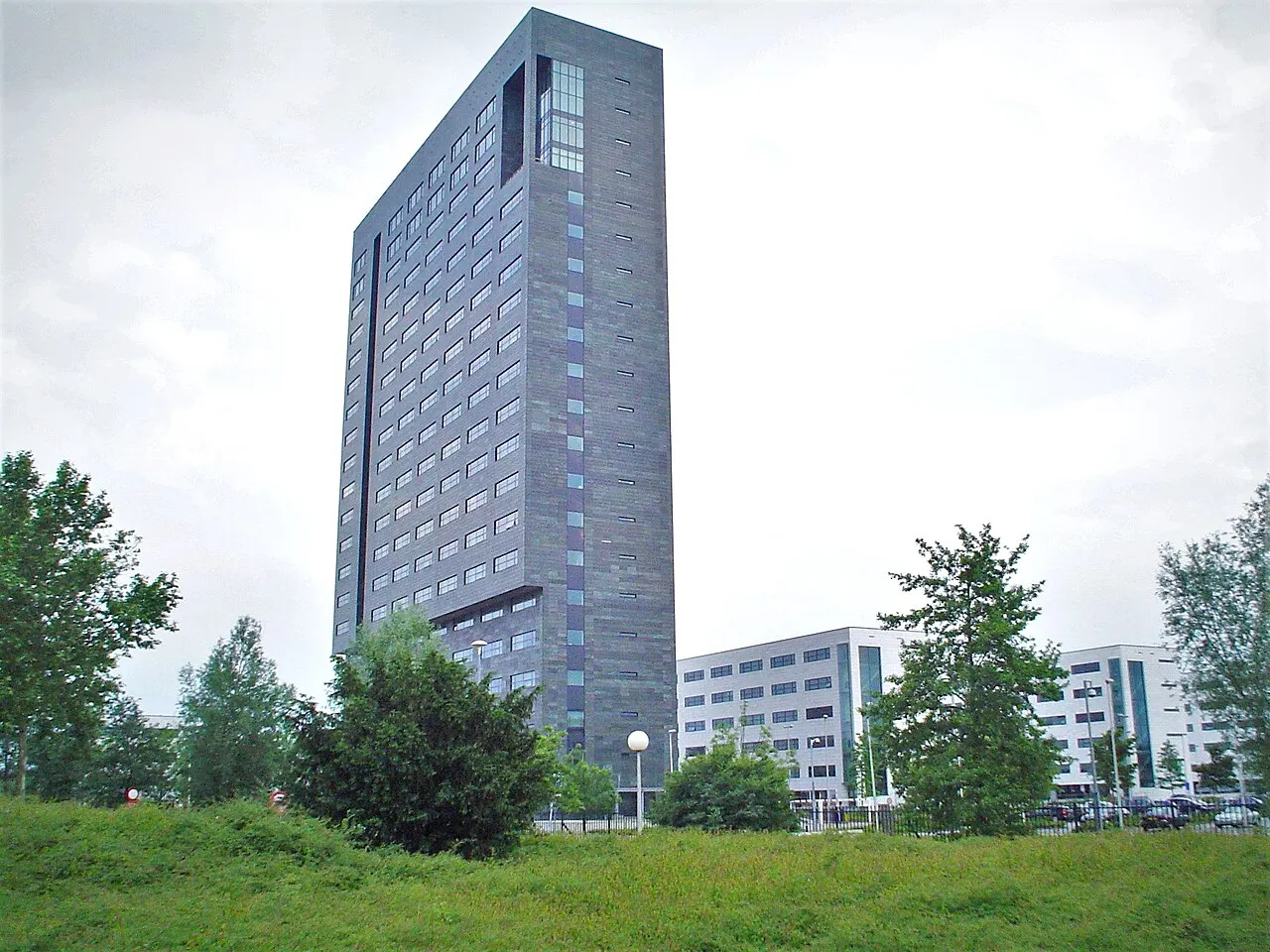
ASML, the Dutch maker of chipmaking lithography equipment, reported on October 15, 2026 the highest quarterly revenue in its history. Third-quarter 2026 sales reached $13.06 billion (€11.66 billion), up 55% year on year and 25% from the prior quarter, as spending on AI infrastructure pushes demand for its machines beyond what it can build.
Gross margin hit a record 57.5%, operating profit came in at $5.79 billion and net profit at $5.56 billion. The company sold 121 lithography systems in the quarter, 113 new and 8 refurbished. Seventeen were EUV tools, the machines needed for the most advanced chips, which generated $4.59 billion in revenue.
Logic chipmakers accounted for 54% of equipment revenue and memory makers for 46%. By region, Taiwan led with 32%, followed by South Korea at 31%, China at 23% and the United States at 13%.
Demand stretching to 2030
Chief financial officer Roger Dassen said ASML expects its current production plans will not cover all customer needs in 2027 and 2028. Chief executive Christophe Fouquet noted that long-term supply agreements give customers clearer visibility into future demand. ASML is taking orders for 2028 delivery, and some customers are weighing orders for 2029 and 2030.
The company expects to ship about 65 Low-NA EUV systems in 2026, up from 44 in 2025. Earlier plans called for a 30% capacity increase in 2027 and a possible further 30% in 2028, implying roughly 85 and 110 EUV units a year; ASML is now looking at going beyond that for 2028. It is also raising throughput: the Twinscan NXE:3800F, due in early 2027, will process 260 wafers per hour versus 230 on the NXE:3800E, and a new critical-layer DUV tool targets up to 330.
High-NA, pricing and China
Intel says it has run more than a million wafers on High-NA tools and plans to use them for its 14A process in 2028. Samsung aims to adopt High-NA for DRAM in 2028, while TSMC's timeline extends to 2030-2031. ASML says availability of its installed High-NA fleet is nearing 90%.
ASML has completed talks with major customers on value-based pricing; Dassen said the effect will be partly felt in 2027 and more visibly from 2028. Despite US export restrictions, China is expected to make up about 20% of 2026 revenue, roughly €8.8-9 billion.
Comments
No comments yet. Start the discussion or ask a question.
Related

Baykar's SİVRİSİNEK smart munitions flew as a 20-strong swarm at the Ateş Serbest-2026 exercise, with 10 breaking away to strike designated targets.
Nvidia shipped 678,000 AI accelerators in China in the first half of 2026, a 34% share, while Huawei's 572,000 units gave it 28%, IDC data show.