How to Create Images with AI: Free Tools and Tips (2026)
A practical guide to making AI images: free tiers in ChatGPT, Gemini, Bing and Firefly, prompting tips, and copyright and commercial-use basics.
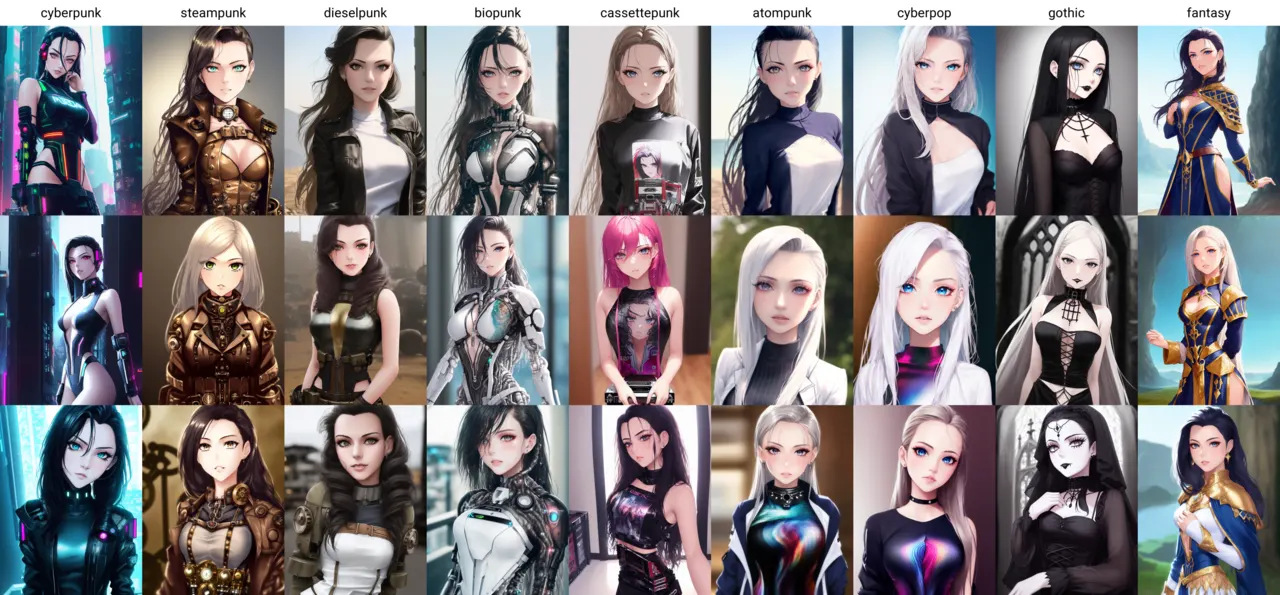
To create an image with AI, you type a description of what you want into a generator such as ChatGPT, Google Gemini, Microsoft Bing Image Creator or Adobe Firefly, and it produces a picture in seconds. Most of these tools offer a free tier with limited daily or monthly generations. Paid plans raise the limits, and commercial use depends on each tool's terms and on copyright law.
This guide reflects what we could gather as of 14 October 2026. Quotas, prices and model names in this space shift every few months, so treat the numbers below as a starting point. Always confirm on the official pricing or help page before relying on them.
Can you create AI images for free?
Yes. Several mainstream tools let you generate images without paying, usually with caps on how many you can make, slower generation, or watermarks. The trade-offs show up in volume and in what you are allowed to do with the results.
If you are comfortable with some setup, you can also run open-weights models on your own computer. There is no generation quota, but you need a capable graphics card and time to install everything.
What are the best free AI image generators?
ChatGPT (OpenAI): Free accounts can generate images. According to CometAPI, a third-party site, free users got roughly 2–3 images per rolling 24-hour window as of April 2026, though the figure varies by user. OpenAI's own help pages give no fixed number and only say free users face stricter limits. ChatGPT Plus, reportedly around $20 a month, raises the cap.
Google Gemini: Google's image model, nicknamed "Nano Banana", is available with a free daily quota in the Gemini app and Google AI Studio. Images carry a visible watermark plus an invisible SynthID marker. Google adjusts these quotas often.
Microsoft Bing Image Creator, Designer and Copilot: Free with a Microsoft account. Microsoft has used a "boosts" system for faster generations and has relied on OpenAI models behind the scenes. Check Microsoft's pages for whether that system has changed.
Other options include Canva Magic Media (limited uses on the free plan), Leonardo.ai (daily free tokens), Ideogram (good at rendering readable text inside images), Meta AI (free but not offered in every country) and xAI's Grok.
For local use, the Stable Diffusion family (SDXL, SD3.5) is released under the Stability Community License, which is free for those under $1M in annual revenue. FLUX.1 [schnell] uses the permissive Apache 2.0 license, while FLUX.1 [dev] is limited to non-commercial use. Read the current license text before building anything on these models.
Is Midjourney free? What about Adobe Firefly?
Midjourney has no permanent free tier. Its last known monthly plans ranged from about $10 for Basic to about $120 for Mega, with Standard and Pro in between. Stealth mode, which keeps your images private, has required Pro or Mega. Verify current pricing on Midjourney's site.
Adobe Firefly offers a free plan with a small monthly allowance of generative credits, and paid plans have started around $9.99 a month. Adobe promotes Firefly as commercially safe because it says the model was trained on Adobe Stock, openly licensed and public-domain material. Some enterprise plans add IP indemnification, and outputs carry Content Credentials (C2PA).
How do you write a good AI image prompt?
Think of a prompt as a brief to an illustrator. Cover the subject, what it is doing, the setting, the style or medium, the lighting, the composition, the mood and the aspect ratio. For photographic results, mentioning a camera angle or lens type helps.
For example: "A fox reading a newspaper in a rainy café window at dusk, warm cinematic lighting, shallow depth of field, 16:9." Newer conversational models such as those in ChatGPT and Gemini respond better to natural sentences than to keyword piles. After the first result, refine with short follow-ups like "make the background darker".
If you want words to appear in the image, put them in quotation marks; Ideogram, ChatGPT and Gemini handle text far better than older models did. For consistency, upload reference images, keep a fixed seed where the tool allows it, and generate several variations to pick from.
Midjourney has its own parameters: --ar sets the aspect ratio, --stylize controls how strongly its house style applies, --no excludes elements and --sref points to a style reference. Most major tools accept prompts in other languages, but English often gives the most accurate results.
Who owns the copyright to AI-generated images?
In many places, nobody does if the image is purely machine-made. The US Copyright Office's January 2025 report on copyrightability concluded that purely AI-generated output is not protected. Human selection, arrangement or modification can be, but writing a prompt alone is generally not enough.
Courts have backed this so far. In Thaler v. Perlmutter, the D.C. Circuit upheld the human-authorship requirement in March 2025. In the 2023 Zarya of the Dawn decision, the comic's text and arrangement were registered but its Midjourney images were not. In Türkiye, copyright law requires a work to bear the personal imprint of a natural-person author, so purely AI output is likely unprotected there too.
Can I use AI-generated images commercially?
It depends on the tool. Under its last known terms, OpenAI assigns ownership of outputs to users to the extent the law allows. Midjourney requires companies earning over $1M a year to be on Pro or Mega for commercial use. Some free tools restrict commercial use or say nothing clear about it, so read the terms.
Even when a tool permits it, risks remain. An output can resemble a trademark, a famous character or a real person, which raises trademark and likeness issues. The legality of training data is still contested: Getty Images reportedly lost most of its UK case against Stability AI in November 2025, Andersen v. Stability AI continues in the US, and Disney and Universal sued Midjourney in June 2025.
Labelling rules are tightening too. The EU AI Act's transparency duties require deepfakes to be disclosed and generated content to be marked in a machine-readable way, originally scheduled from 2 August 2026. A late-2025 EU proposal could delay or soften parts of this, so check the current status if you publish in Europe. For high-stakes work, ask a lawyer.
Frequently asked questions
What is the best free AI image generator?
ChatGPT, Google Gemini, Bing Image Creator, Adobe Firefly, Canva and Leonardo.ai all have free tiers. Which is best depends on your needs; Ideogram, for example, is strong at text inside images. Limits change often, so check each tool's page.
How many free images can I make with ChatGPT?
A third-party source reported roughly 2–3 images per rolling 24 hours for free users as of April 2026. OpenAI does not publish a fixed number and only says free limits are stricter.
Can AI-generated images be copyrighted?
Purely AI-generated images are not protected under US Copyright Office guidance, and courts have upheld the human-authorship rule. Meaningful human selection, arrangement or editing can qualify for protection.
Can I sell images made with AI?
Often yes, if the tool's terms allow commercial use, but some free plans restrict it and Midjourney has a revenue threshold. Avoid outputs that resemble trademarks, characters or real people.
Do AI images have watermarks?
Many do. Google Gemini adds a visible watermark and an invisible SynthID marker, and Adobe attaches Content Credentials. Provenance labels like these are becoming standard.
More guides
- AI regulations around the world: country guide (2026)
- What Is DeepSeek? Models, Access, Pricing and Privacy
- What is an AI agent? How agents work, tools and risks
- What is an LLM? Large language models explained (2026)
- Can You Make Money With AI? Realistic Ways and Scams (2026)
- Will AI Replace Jobs? What Studies and Official Data Say