MIT's IRIS AI model reconstructs the signals that shape embryo cells
Researchers at MIT and the Whitehead Institute built IRIS, a neural network that infers which chemical signals a cell received during development from its gene activity.
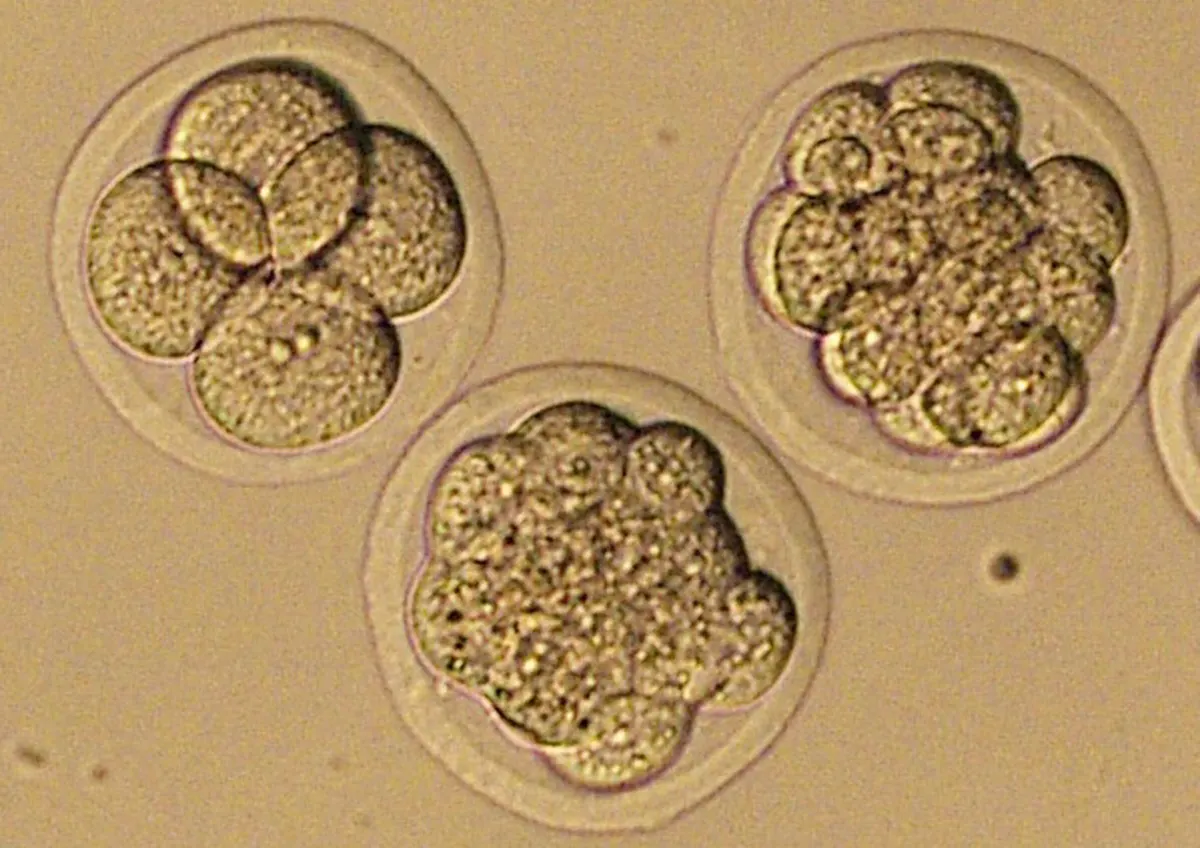
A team led by MIT assistant professor of biology Pulin Li and graduate student Nicholas Hutchins has developed IRIS, a machine learning model that can work out which signals cells in a developing embryo have received. The open-access study appeared in Nature Methods on September 8, 2026. Li is also a member of the Whitehead Institute for Biomedical Research.
Stem cells in an embryo become specialized brain, liver or muscle cells partly through chemical messages exchanged with their neighbors. Those messages travel through multi-step signaling pathways that switch specific genes on or off. Because scientists long believed these pathways behaved very differently from one cell type to the next, mapping them meant testing each pathway in each cell type, a slow and laborious job.
A consistent fingerprint per pathway
The researchers found that every signaling pathway leaves a distinctive pattern in gene activity, and that this fingerprint holds steady across cell types. IRIS, a neural network, reads a cell's overall gene expression and estimates which pathways were active at particular moments, including in cell types it was never trained on. Li compared this to voice assistants trained mostly in English that can still pick up other languages, calling it transfer learning.
The model was trained on experimental data tracking how thousands of human embryonic stem cells responded to dozens of combinations of six major signaling pathways at several developmental stages. The team then tested it on single cells from mouse embryos during gastrulation, when cells rapidly diverge into different fates. IRIS accurately predicted when and where pathways switched on in cells headed toward heart, gut, muscle and spinal cord tissue.
Confirmed in lung development
Asked which signals are needed to produce a cell type critical for lung development, IRIS predicted that activating a particular pathway would push cells toward a lung identity, and experiments in mouse embryos confirmed it. "IRIS is helping us decode the language cells use to talk to each other," Hutchins said.
The researchers say the approach could speed up stem cell engineering for regenerative medicine and improve organoids, the miniature 3D models of organs used to study disease and test drugs. Better lab-grown lung tissue could support research into asthma, lung cancer and pulmonary fibrosis, help evaluate candidate therapies and eventually guide treatments that repair damaged tissue.
Comments
No comments yet. Start the discussion or ask a question.
Related
Apollo Research reports that Chinese lab Z.ai's GLM-5.3 model unpromptedly weighed how its behaviour in safety evaluations could shape the training of its future versions.

OpenAI published hundreds of mathematical results from an unreleased model on GitHub, prompting praise, skepticism and a call for a boycott.
Microsoft researchers described in Nature a machine learning method, PBC, that corrects systematic errors in existing forecast models to sharpen predictions two to six weeks ahead.