Kyutai releases REKI, a 2.4B vision-language-action model for robots
Paris lab Kyutai, working with Inria and École des Ponts, has unveiled REKI, a robot manipulation model trained only on public data and equipped with a low-cost short-term memory.
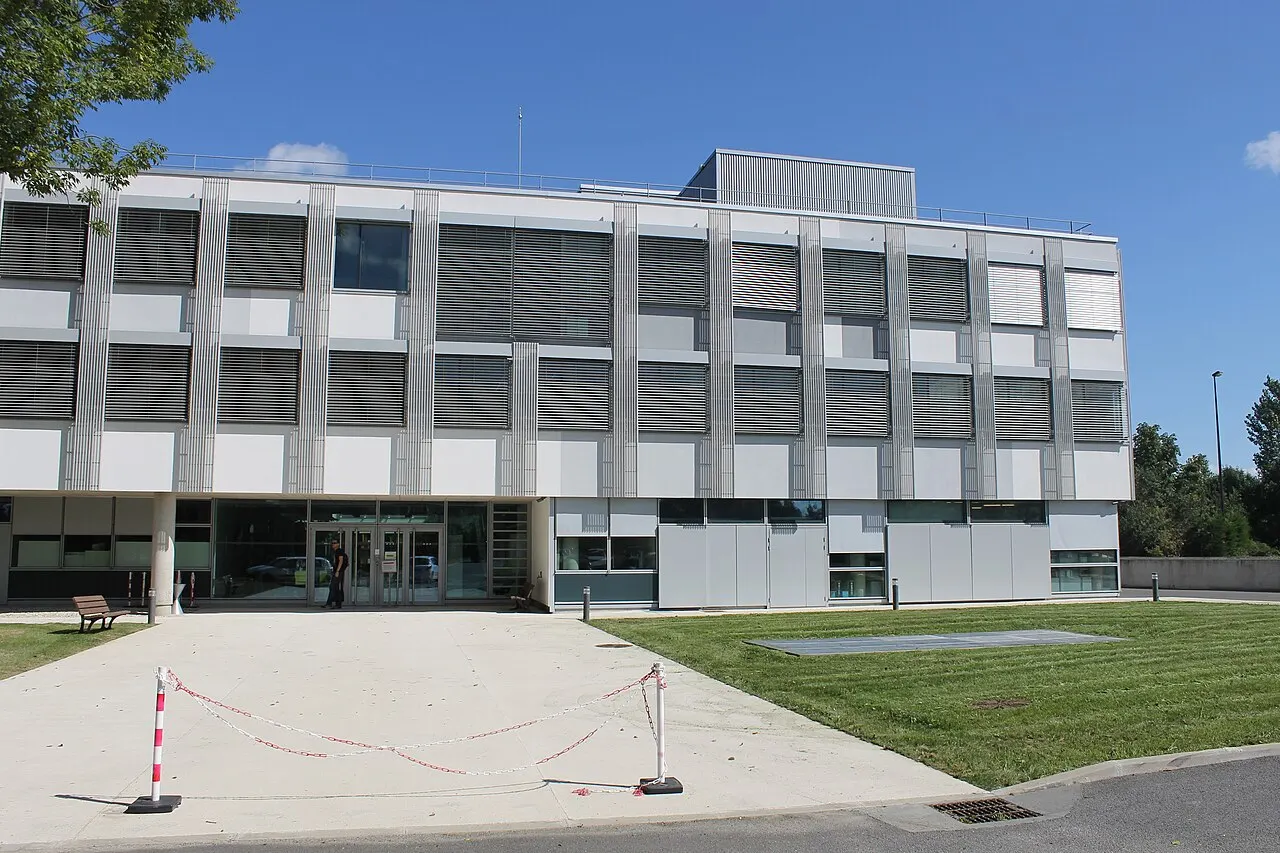
Kyutai, the Paris-based AI research lab, has released REKI, a 2.4-billion-parameter vision-language-action (VLA) model built for robot manipulation. The model, announced on 17 October 2026, was developed together with Inria, France's national institute for digital science, and the engineering school École des Ponts.
The team is highlighting two features. REKI was pretrained exclusively on publicly available data, and it keeps an inexpensive memory of what has happened in its recent past rather than reasoning from a single snapshot.
Why memory matters for robots
VLA models aim to turn camera input and natural-language instructions directly into robot actions. Many such systems decide each move based only on the current frame, which can trip them up on multi-step tasks or when an object leaves the camera's view.
A model that remembers its recent history can, in principle, handle sequential jobs more coherently, such as opening a drawer and then placing an item inside it. Keeping that memory cheap matters because robots typically run on limited onboard compute. Full details of REKI's evaluation, including which tasks and benchmarks it was tested on, were not available in the material reviewed for this article.
An open-data approach
Much of the progress in robot learning has come from models trained on proprietary datasets that companies do not share. Relying solely on public data makes it easier for other researchers to reproduce results and build on the work, a point that could make REKI a useful reference for academic labs.
Kyutai is best known for open releases such as Moshi, its real-time voice model. With REKI, the lab extends that open research approach into robotics, and the project illustrates the growing collaboration between private AI labs and public research institutions in France.
Comments
No comments yet. Start the discussion or ask a question.
Related
Chinese AI startup DeepSeek rolled out V4.1-Flash-1017 on October 17, 2026, claiming better benchmark scores, quicker task completion and shorter outputs.
Chinese AI company DeepSeek has rolled out V4.1-Flash-1017, a new checkpoint of its V4.1-Flash model, on its website, app and API, alongside a search API.
Chinese AI company StepFun has published open weights for Step 5 Preview, a 600-billion-parameter sparse model with 27 billion active parameters and a 1 million token context.